 Manufactured in Glen Innes Auckland on January 1978 by W. Hunt & Son Ltd this HUNSON RT revolutionized mains pressure water heating in New Zealand!
Due to high manufacturing costs and technology limitations, in the 1970’s hot water cylinders were primarily manufactured from copper. 
Copper hot cylinders are made to suit low to medium pressures (75KPA – 120KPA), with medium pressure cylinders being made from thicker copper. The week spot on a cylinder is not the actual copper material but rather the machine manufactured welding seams. Anything above 120KPA depending on weld quality and the seam will crack resulting in a burst hot water cylinder!
So how do you get around this problem and achieve mains pressure using low pressure technology? W. Hunt & Son Ltd certainly acknowledged the demand for mains pressure and their reply was the advanced Hunson RT Direct mains pressure hot water system. Great engineering and ahead of its time.
What makes the Hunson RT so special?

The basic principal was to use the heat exchanger to supply mains pressure ONLY to one shower making it a semi “instantaneous water heater” (in the 70’s showers started becoming more popular) whilst using the large low pressure body of water to supply the exchange heat to the mains pressure coil and direct supply to all other low pressure fixtures such as a bath or laundry.
On request Hunson could manufacture these cylinders with multiple elements up to a total of 8KW! This would certainly make the supply more reliable and showers longer but expensive to run (not sure about power rates VS income in the 70’s). Modern cylinders use the same technology in reverse because water can now be stored in a mains pressure environment (stainless steel or enamel) and of course also because of a few other reasons such as efficiency and reliability.
What challenges did this “new style” mains pressure cylinder present to home owners?

To start with, it was important the plumber got the installation right. If you have a look at the image you will see the instruction says: “At all times, the flow from the cylinder should be strong and steady, but not excessive”. Mains pressure can be anywhere from 120KPA to 500KPA and the term “not excessive” is too broad. If the pressure was set too high the heat exchanger would not have enough time to keep up with the demand. Plumbers also started using the mains pressure supply (which was originally only intended for one shower) to deliver mains pressure to the whole house and all plumbing fixtures! This immediately presented a problem because the standard supplied element of 3KW could not keep up with the demand and showering usually was over after 5 minutes! This was also the case with Hunson RT you see in this image. the only reason this cylinder survived over 30 years was because the hot water from the low pressure supply side was never used. The sludge build-up on the inside would reach all the way up to the element. Despite a sludge relief point which was most likely never ever used.
Another common issue this technology presented was random cold patches during a warm shower. Have a look at the diagram and see whether you can identify expansion, cold water inlet, hot water supply, overflow and sludge outlet. This  cylinder also provides bottom entry connections for wetbacks.
Why did this hot water cylinder receive the nickname “The Elephant”?
It turns out there used to be an engineering company in New Zealand call Elephant NZ. Elephant NZ originally came with this technology and design which was purchased by W. Hunt & Son Ltd. Why that actually engineering company was called Elephant, we don’t know but if you do, please send me an email so we can add this info to our article.


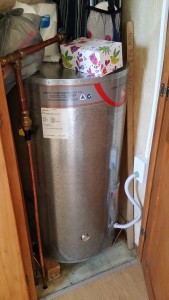 This home owner would have been stoked to get this cylinder installed at $500 below going market price! There is a good reason why…

 .
.





